
Here on this page, we'll learn about the Search Engine Optimization Roadmap for Google Authority. Search engine success never happens by luck. Instead, strong rankings grow through planning, patience, and precision. Therefore, businesses must follow a clear SEO roadmap. This roadmap helps websites gain trust, visibility, and long-term authority on Google. You can hire me on Freelancer Profile if you need Google SEO for your website.
Search engines reward clarity. They favor useful content, fast websites, and real user value. Because of this, random SEO actions often fail. However, a structured approach builds consistent growth.
Moreover, Google's authority depends on trust signals. These signals come from content quality, technical strength, and user engagement. Consequently, every step in SEO must support these signals.
Meanwhile, competition increases every day. New websites appear daily. As a result, only strategic SEO survives long-term. A roadmap gives direction. It prevents wasted effort.
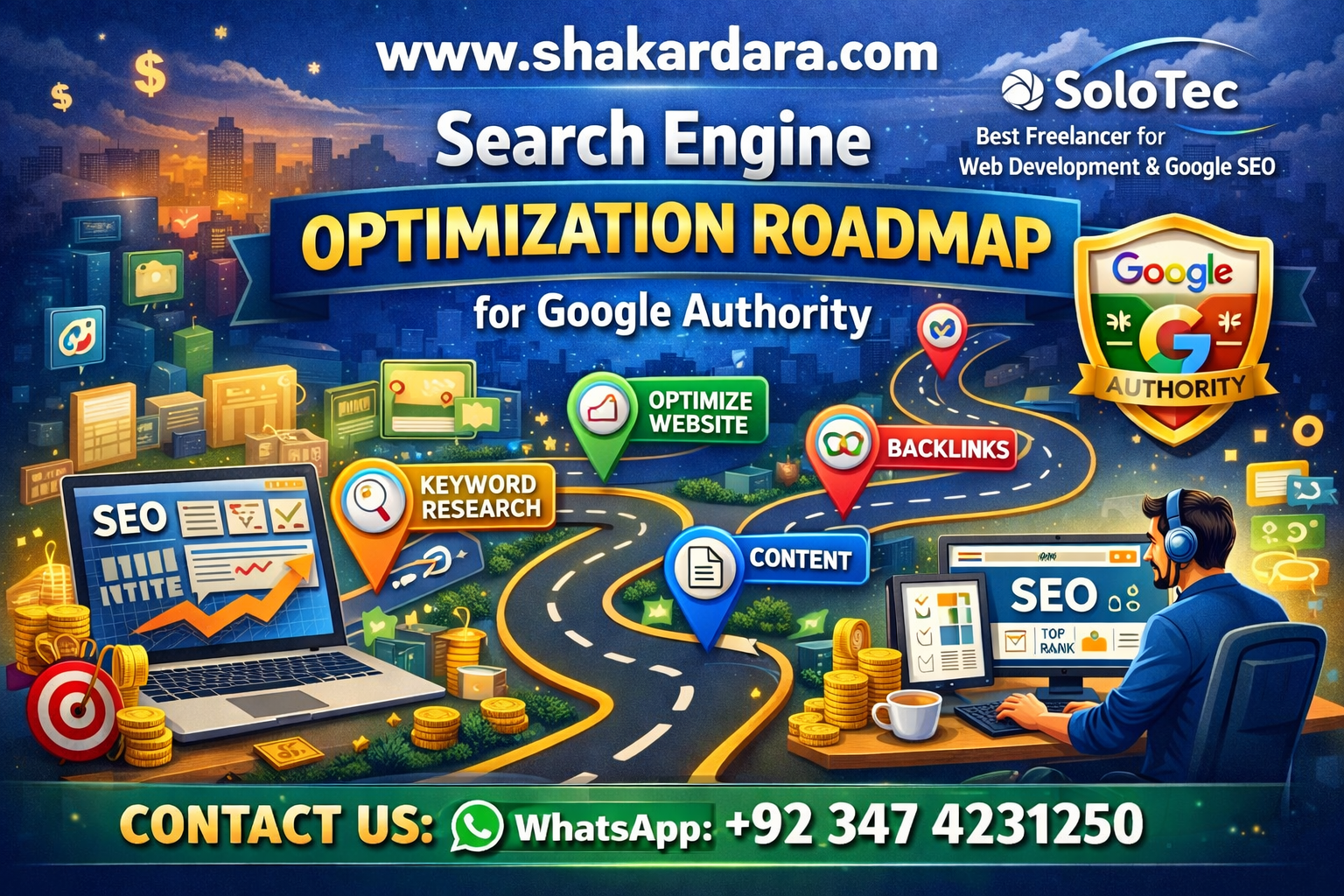 The Search Engine Optimization Roadmap for Google Authority
Furthermore, SEO authority does not rely on shortcuts. Instead, it grows through ethical and user-focused optimization. Google updates to reward helpful experiences. Therefore, smart SEO aligns with Google guidelines.
In addition, global businesses need scalable SEO plans. A roadmap ensures consistency across pages, regions, and devices. Hence, structured SEO matters for growth.
This guide explains a complete Search Engine Optimization Roadmap for Google Authority. Each step builds trust. Each phase supports rankings. Ultimately, this approach strengthens online presence worldwide.
Understanding Google Authority and SEO Foundations
Google authority reflects credibility. It measures how much Google trusts your website. Therefore, authority influences rankings.
Primarily, Google's authority depends on content relevance. It also depends on technical quality. Additionally, backlinks matter. Together, these signals shape trust.
However, authority does not appear instantly. Instead, it grows over time. Google watches behavior. It tracks engagement. As a result, consistency becomes essential.
Furthermore, SEO foundations include crawlability. Search engines must read your site. Clean code helps bots. Logical structure improves indexing.
Meanwhile, keyword relevance remains critical. Pages must match search intent. Therefore, keyword planning shapes content creation.
Also, site speed impacts authority. Faster websites reduce bounce rates. Consequently, performance supports trust.
Most importantly, user satisfaction matters. Google rewards positive experiences. Thus, SEO always serves users first.
Keyword Strategy Aligned With Authority Growth
Keywords guide search visibility. They connect users with content. Therefore, keyword strategy sits at the roadmap’s core.
First, choose topic-focused keywords. Avoid random phrases. Instead, match real user intent.
Second, target long-tail keywords early. They bring qualified traffic. Moreover, they convert better.
Third, cluster keywords logically. One page should target one theme. Consequently, clarity improves rankings.
Importantly, include Search Engine Optimization Roadmap naturally. Also, use Google Authority in meaningful contexts.
Additionally, integrate Search Engine Optimization where relevance fits. Meanwhile, avoid stuffing. Balance matters.
Furthermore, keyword placement should feel natural. Titles matter most. Headings help structure. Body text supports context.
Ultimately, keywords support discovery. However, content quality drives authority.
Content Architecture for Sustainable SEO Authority
Content structure shapes understanding. It guides both users and search engines. Therefore, planning matters.
Begin with a clear hierarchy. Use one H1 only. Then, organize into H2 sections. Subsections follow naturally.
Moreover, content depth builds trust. Each topic must answer real questions. Avoid shallow explanations.
Also, readability strengthens engagement. Short sentences improve flow. Simple words boost comprehension.
Furthermore, paragraph length matters. Keep paragraphs under 150 words. This helps scanning.
Additionally, internal linking improves authority flow. Pages should support each other. As a result, topical strength grows.
Importantly, content freshness matters. Regular updates signal relevance. Therefore, revise content periodically.
Quality content supports Google Authority growth. It also reinforces Search Engine Optimization success.
Technical SEO as the Backbone of Authority
Technical SEO supports performance. Without it, content fails to rank. Therefore, technical health remains critical.
First, ensure fast load times. Speed affects rankings. Compress images. Use clean code.
Second, mobile responsiveness matters. Google uses mobile-first indexing. Therefore, optimize for phones.
Third, fix crawl errors. Broken links confuse bots. Clean architecture helps indexing.
Additionally, use HTTPS security. Secure sites earn trust. Google favors safety.
Moreover, structured data enhances understanding. It helps Google interpret content. Rich results improve visibility.
Furthermore, optimize URLs. Keep them short. Make them descriptive.
Strong technical SEO strengthens the Search Engine Optimization Roadmap execution.
On-Page SEO Optimization for Authority Signals
On-page SEO shapes relevance. It communicates the topic focus to Google. Therefore, optimization must remain precise.
Title tags influence clicks. They should include keywords naturally. Keep them compelling.
Meta descriptions support engagement. Although not a ranking factor, they improve CTR.
Headings guide content flow. Use H2 and H3 logically. Avoid keyword stuffing.
Additionally, image optimization matters. Use alt text wisely. Improve accessibility.
Furthermore, internal links guide users. They distribute authority. They support crawl depth.
On-page signals strengthen Google Authority steadily.
Off-Page SEO and Trust Building
Off-page SEO builds reputation. It signals credibility beyond your site. Therefore, backlinks matter.
Quality backlinks outperform quantity. Links from trusted sites help rankings. Avoid spam links.
Additionally, brand mentions support authority. Even unlinked mentions matter.
Furthermore, social signals influence visibility. While indirect, they amplify reach.
Guest posting builds authority. However, relevance matters more than volume.
Consistent off-page work supports Search Engine Optimization goals long-term.
User Experience and Behavioral SEO Metrics
User behavior influences rankings. Google tracks engagement signals. Therefore, UX matters.
Low bounce rates indicate relevance. High dwell time signals satisfaction.
Clear navigation helps users. It also helps bots. Simplicity improves experience.
Readable design matters. White space improves focus. Fonts should remain clear.
Furthermore, call-to-action clarity guides behavior. Helpful CTAs increase engagement.
Better UX supports Google Authority growth.
Content Promotion and Indexing Acceleration
Content promotion increases discovery. Without promotion, content remains invisible. Therefore, sharing matters.
Submit content through Search Console. This speeds indexing.
Additionally, share content on social platforms. Reach expands visibility.
Email outreach helps early traction. It drives initial engagement.
Content promotion supports Search Engine Optimization Roadmap execution.
Monitoring SEO Performance and Authority Growth
Tracking performance guides improvement. Without data, SEO stays blind. Therefore, analytics matter.
Monitor rankings regularly. Track keyword movement. Adjust strategies accordingly.
Analyze traffic behavior. Identify high-performing pages.
Check crawl reports often. Fix errors quickly.
Backlink monitoring prevents penalties. Disavow harmful links.
Data-driven decisions strengthen Search Engine Optimization success.
Long-Term SEO Maintenance for Google Authority
SEO never ends. Authority requires maintenance. Therefore, consistency matters.
Update content regularly. Refresh outdated information.
Audit technical health quarterly. Fix performance issues early.
Expand content strategically. Build topical depth.
Monitor competitors. Adapt when trends change.
Long-term focus sustains Google's Authority.
Final Thoughts on SEO Authority Building
Google authority rewards patience. Shortcuts fail over time. Ethical SEO wins.
A clear roadmap prevents confusion. It aligns effort with results.
This Search Engine Optimization Roadmap for Google Authority provides structured growth. It supports trust, relevance, and visibility.
When executed correctly, SEO becomes an asset. It drives traffic. It builds credibility.
For businesses seeking sustainable growth, this roadmap delivers clarity and results.
 0
0 20
20 20
20 20
20