
On this page, you will learn how to implement search engine optimization on a new website. Starting a new website is exciting, yet challenging. You must consider how to attract visitors effectively. Moreover, implementing Search Engine Optimization (SEO) is crucial for visibility. Many website owners overlook the step-by-step approach required to rank on Google. Consequently, traffic suffers, and business goals are delayed. Fortunately, this guide explains how to rank a website properly. Furthermore, it includes practical methods to improve search engine results. From selecting keywords to monthly maintenance, each step is essential. Also, worldwide clients can benefit from affordable, professional services offered at Shakardara.com. For expert consultation, contact WhatsApp +923474231250.
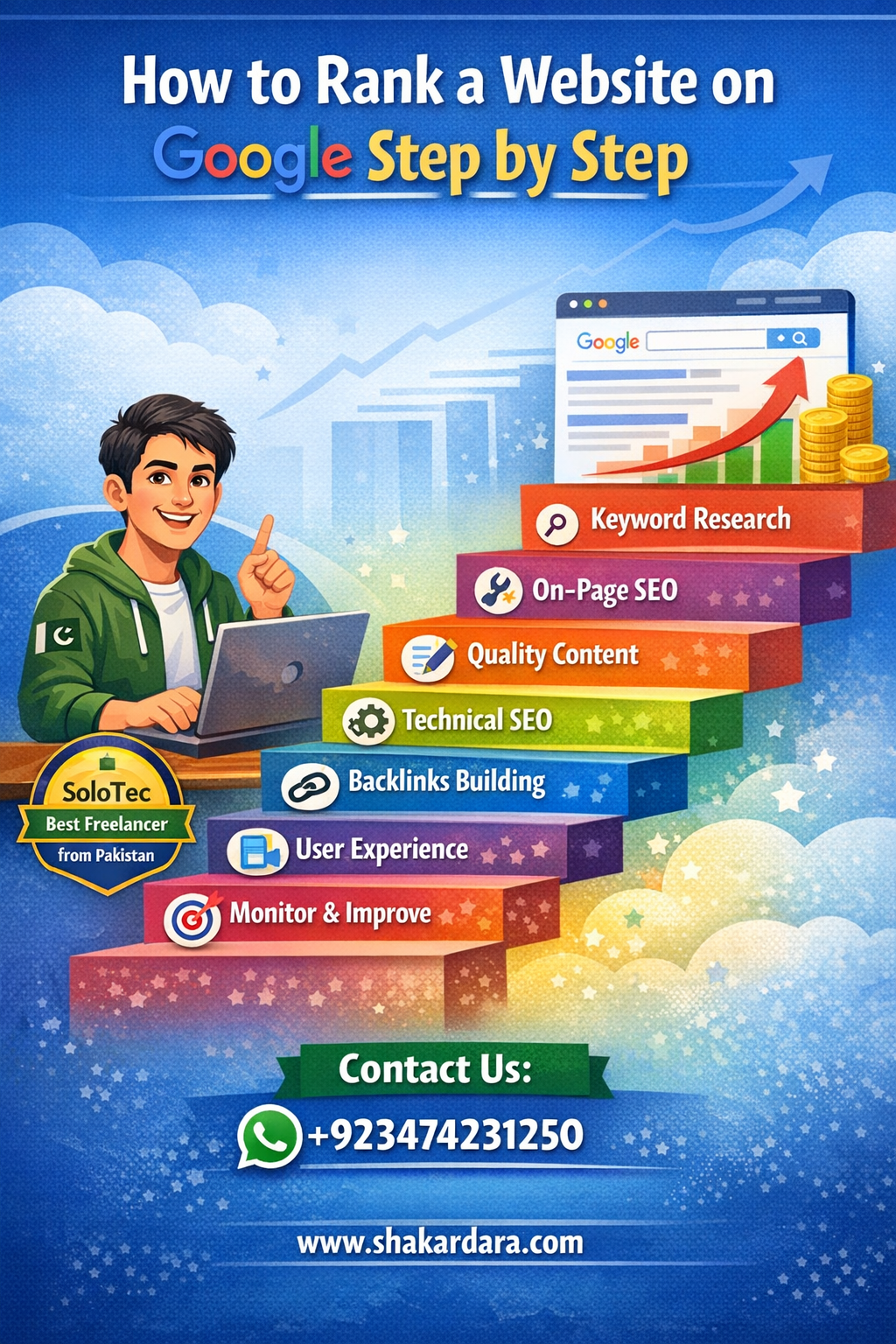 Learn how to implement search engine optimization on a new website.
Understanding the Basics of Search Engine Optimization
To begin, you must understand Search Engine Optimization fundamentals. SEO enhances website visibility on Google and other search engines. Initially, websites need a clear structure, proper coding, and relevant content. Moreover, search engines reward sites with fast load times and mobile-friendly designs. Therefore, implementing SEO from the start saves time and increases efficiency. Besides technical optimization, content strategy plays a key role. Consistently publishing valuable content improves rankings and user engagement.
Additionally, SEO requires attention to keywords. Keywords like “Rank a Website" and “Search Engine Step by Step" guide users to your content. Consequently, accurate keyword placement within titles, headings, and paragraphs increases discoverability. Transition phrases such as “for example,” “as a result,” or “in addition” help readers follow the content smoothly. This strategy improves readability and encourages longer site visits.
Keyword Research for Your New Website
Firstly, keyword research determines what users search for online. Tools like Google Keyword Planner or Ahrefs provide insights into search volumes. Moreover, understanding search intent ensures your content addresses audience needs. For instance, targeting “Search Engine Optimization" queries helps attract businesses seeking digital growth.
Secondly, long-tail keywords improve conversion rates. They are specific phrases users type, such as “how to rank a website step by step". Using these strategically ensures your content reaches the right audience. In addition, competitor analysis reveals gaps in content and opportunities to outrank others. By monitoring competitor strategies, you can create superior content that satisfies both users and search engines.
Lastly, keyword placement is critical. Insert keywords naturally in headings, subheadings, meta descriptions, and throughout the article. Do not overuse them; Google penalizes keyword stuffing. Instead, aim for 1.5% density for primary keywords like “Search Engine", “Rank a Website", and “Search Engine Step by Step".
Website Structure Optimization
Proper structure improves both user experience and SEO performance. Initially, organize your website with clear menus and navigation. Also, ensure URLs are descriptive and include relevant keywords. For example, how to rank a website.
Furthermore, internal linking guides search engines to important pages. Linking from older posts to new ones distributes page authority effectively. Additionally, creating an XML sitemap allows search engines to index all pages efficiently. Use clean code, fast-loading images, and mobile responsiveness. As a result, your site ranks higher on Google search results.
Moreover, meta tags like title tags and meta descriptions are essential. Include keywords naturally and maintain character limits. Titles should be under 60 characters, and meta descriptions under 160. This ensures they display fully in search results.
Content Creation and Optimization
Content drives SEO success. High-quality, relevant articles keep users engaged. For instance, explain processes clearly using short sentences. Transition words such as “however,” “therefore,” and “in contrast” enhance readability.
In addition, headings and subheadings break content into digestible sections. Include primary keywords in at least one heading per section. Moreover, use images with descriptive alt text. Alt text should include keywords like “Search Engine Optimization" to improve visibility.
Also, regularly update content to maintain relevance. Search engines favor fresh, accurate information. Consequently, your website authority increases, and ranking improves. Internal linking to related posts strengthens site structure and encourages longer visits.
On-Page SEO Techniques
On-page SEO includes all actions taken on your website. Begin by optimizing titles, headings, and content with primary keywords. Furthermore, images must be compressed to ensure fast loading.
Moreover, meta descriptions, title tags, and header tags must follow SEO best practices. Include keywords naturally, keep descriptions concise, and write engaging titles. Also, implement structured data to help search engines understand your content. For instance, schema markup for articles improves visibility in rich results.
Off-Page SEO Strategies
Off-page SEO boosts credibility through backlinks and social signals. First, acquire backlinks from reputable websites. Quality links signal to Google that your content is valuable. Moreover, social media sharing increases website exposure. For instance, posting articles on Facebook, Twitter, and LinkedIn generates traffic and links.
Secondly, guest posting on relevant blogs enhances authority. Ensure links point back to your website naturally. Additionally, directory listings and business citations improve local SEO. Consequently, your website becomes easier to find for users and search engines.
Furthermore, monitor backlinks regularly to remove harmful links. Tools like Ahrefs or SEMrush help track link profiles. Maintaining a clean backlink profile ensures long-term ranking stability.
Technical SEO Optimization
Technical SEO ensures that search engines can crawl and index your website efficiently. Initially, improve website speed through image compression and caching. Moreover, mobile responsiveness is critical; Google prioritizes mobile-friendly sites.
Additionally, use HTTPS for secure browsing. Security increases user trust and ranking. Implement structured data, canonical tags, and XML sitemaps for better indexing. Broken links and 404 errors should be fixed immediately. As a result, both user experience and search engine performance improve.
Furthermore, monitor website analytics to identify technical issues. Tools like Google Search Console highlight crawl errors, slow-loading pages, and indexation problems. Regular technical maintenance ensures continuous ranking improvement.
Local SEO for Global Reach
Even for worldwide clients, local SEO matters. First, claim your Google Business Profile and optimize it with accurate details. Include NAP (Name, Address, Phone) consistency across directories. For instance, WhatsApp +923474231250 must be visible on your website and listings.
Secondly, local keywords improve search visibility. For example, “web development services in Shakardara” targets location-specific users. Reviews and testimonials build credibility and attract more traffic. Additionally, local content such as news, events, or blog posts improves engagement. Consequently, even global clients searching regionally can discover your services efficiently.
Monthly SEO Maintenance
SEO is not a one-time effort; it requires continuous monitoring. Firstly, track keyword rankings and website traffic. Tools like Google Analytics and SEMrush help identify performance trends. Secondly, update old content to maintain relevance. Thirdly, optimize for new keywords to stay competitive.
Moreover, audit backlinks and remove harmful links. Fix technical issues like slow pages or broken links promptly. Also, monitor competitor activity and adjust strategies accordingly. Monthly maintenance ensures long-term growth, increased website authority, and higher search engine rankings.
For professional SEO services at low prices, contact WhatsApp +923474231250. Shakardara.com provides worldwide clients with tailored solutions, including web development, article writing, and ongoing SEO maintenance.
Measuring SEO Success
Track SEO results regularly to ensure progress. Metrics like organic traffic, keyword rankings, bounce rate, and page speed indicate success. Additionally, conversion rate measures how effectively traffic turns into customers.
Moreover, tools like Google Analytics and Google Search Console provide insights. Regular reporting identifies strengths and areas for improvement. For example, if a blog post ranks poorly, revise the content or optimize the keywords. Furthermore, analyzing user behavior helps create better strategies. Consequently, your website continues to grow in authority and traffic over time.
Conclusion: Step-by-Step SEO Implementation
Implementing Search Engine Optimization on a new website requires planning, consistency, and monitoring. Start with keyword research, structure optimization, and content creation. Then, apply on-page, off-page, technical, and local SEO strategies. Regular maintenance ensures long-term ranking success.
Shakardara.com offers worldwide clients professional web development, SEO-friendly article writing, and affordable monthly maintenance. Contact WhatsApp +923474231250 for assistance in boosting your website visibility. By following this guide, you can confidently understand how to rank a website using a systematic, step-by-step approach for maximum results.
 0
0 20
20 20
20 20
20